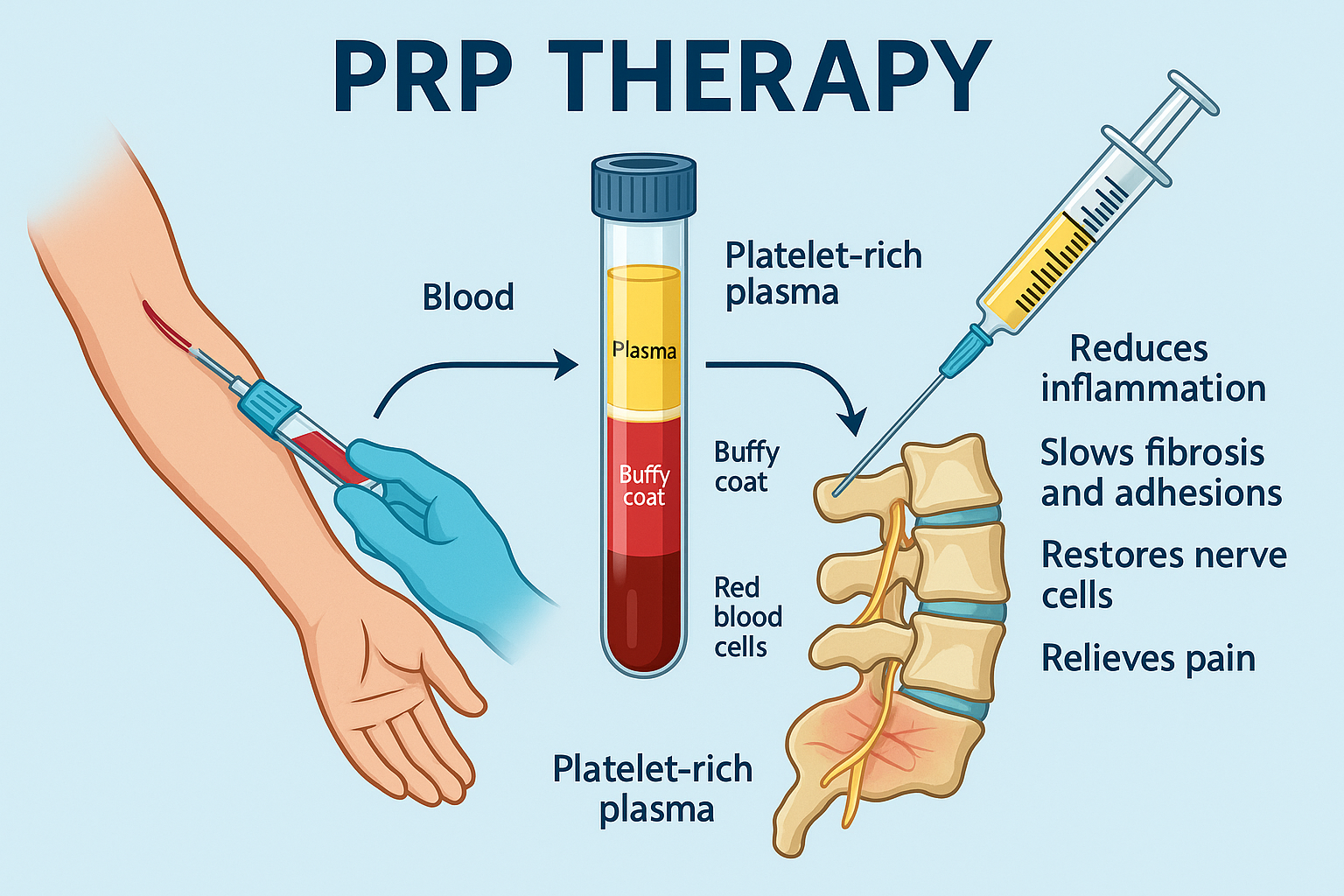
PRP therapy (Platelet-Rich Plasma) is an effective method for treating acute and chronic neurological disorders. It works by activating the body’s cellular immunity using the patient’s own platelets, which supports the regeneration of damaged tissues.
The procedure has an excellent safety profile — most patients do not experience any side effects. If they do occur, they are minor and temporary, such as slight soreness, redness, or mild swelling at the injection site.
Indications for PRP Therapy
Cervicalgia, lumbalgia, thoracalgia (spinal dorsopathy)
Osteochondrosis, spondylosis, spondyloarthrosis and other degenerative-dystrophic spinal changes
Intervertebral hernias and disc protrusions
Headaches and dizziness
Peripheral neuropathies and inflammation of peripheral nerves
Rehabilitation period after spinal and limb injuries or surgeries
Recovery stage after a stroke
In ankylosing spondylitis (Bechterew’s disease), PRP therapy is used as an additional supportive method.
How PRP Therapy Works
Platelets are rich in biologically active substances — hormones, vitamins, and proteins. Once activated, they trigger natural healing processes that reduce inflammation, restore tissues, and relieve pain.
A noticeable improvement may appear after the first session.
How PRP Therapy is Performed
8–64 ml of the patient’s blood is drawn — the exact amount is determined by the neurologist. The blood is then centrifuged for 5 minutes at 3500 rpm, separating it into fractions. This produces 4–32 ml of platelet-rich plasma (PRP).
The PRP is collected into LUER-LOCK syringes with ultra-thin laser-sharpened needles to ensure maximum comfort.
PRP is injected into tissues near the spine and directly into painful zones.
A complete treatment course usually includes 1–3 sessions, performed twice per month.
Benefits of PRP Therapy in Neurology
Reduces inflammation
Slows formation of fibrosis and scar adhesions
Stimulates new blood vessel growth
Supports regeneration of peripheral nerve cells
Improves tissue oxygenation
Relieves pain
Helps reduce herniated discs and protrusions
Restores mobility and range of motion
Prolongs remission in chronic conditions
How to Maximize Treatment Results
Before PRP Therapy:
Avoid anticoagulants for 2 weeks (if approved by your doctor)
7 days prior: no alcohol, no smoking, avoid stress, avoid NSAIDs (ibuprofen, diclofenac)
Eat more fruits and vegetables, lower animal fat intake
After PRP Therapy:
Avoid strength training during the treatment course
On the procedure day: minimize physical activity
For one week: avoid heavy loading of the muscles near injection sites
Book a Consultation
To undergo PRP Therapy at our neurology department, contact us:
Contact us on: Facebook | Instagram
Email: clinicharmony.tb@gmail.com
Mobile: +995 599 610 205